Donation & Charity
September 3, 2026
11 min read
Last updated: September 3, 2026
The Significance of Mahalaya Amavasya (Sarvapitri Amavasya): Why This Day Matters
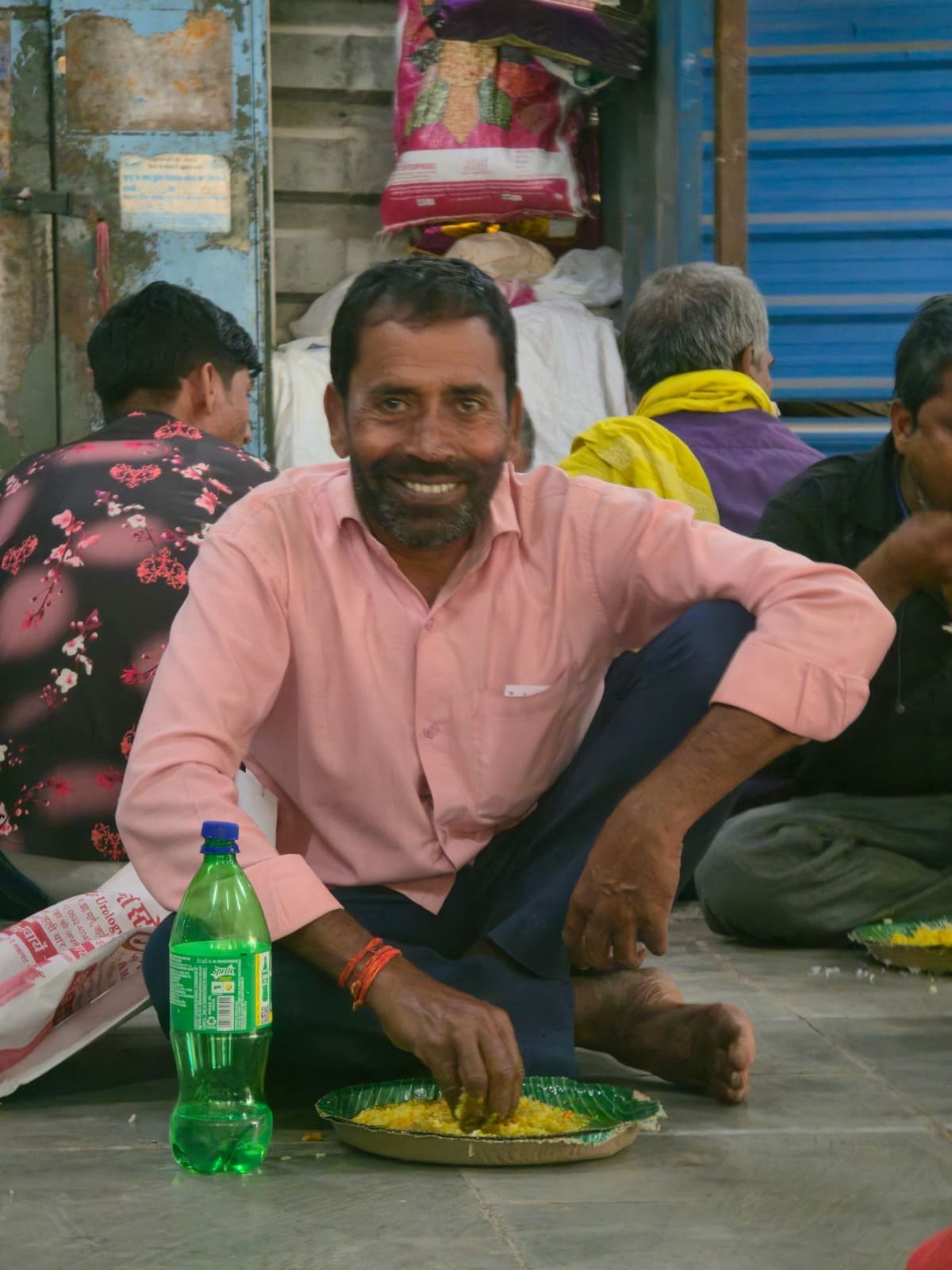
Every culture that remembers its dead eventually asks the same question: what do we owe the people who came before us, and how do we repay it? In the Hindu tradition, Pitru Paksha is the annual answer to that question — and Mahalaya Amavasya, also known as Sarvapitri Amavasya, is where that answer reaches its fullest expression. Falling on October 10, 2026, this single day is considered more spiritually significant than any other point in the 16-day period. This piece looks at why — the scriptural reasoning behind it, what makes it distinct from ordinary ancestor worship, and how that significance can be translated into something concrete.
The Spiritual Meaning Behind Sarvapitri Amavasya
At the centre of Pitru Paksha's significance is a concept called Pitru Rina — the ancestral debt. Hindu tradition holds that every person is born owing three debts across a lifetime: a debt to the divine (Deva Rina), a debt to sages and teachers (Rishi Rina), and a debt to one's ancestors (Pitru Rina). Where the first two debts are repaid through worship and learning, Pitru Rina is repaid specifically through Shradh — the ritual remembrance and offering made to those who came before.
Sarvapitri Amavasya represents the most complete opportunity to repay that debt, because it is the one day when the debt can be settled collectively, for every ancestor at once, rather than one relative at a time. This is why the day is described in some traditions as carrying the combined merit of all the individual Shradh days that preceded it — a kind of spiritual summation of the entire fortnight.
There's also a belief, common across several regional traditions, that on this final day, the barrier between the realm of the living and Pitru Loka (the ancestral realm) is at its thinnest. Whatever offering is made — whether Tarpan, Pind Daan, or Anna Daan — is believed to reach the ancestors most directly on this day, more so than on any other.
Why It's Considered More Powerful Than Individual Tithi Shradh?
The other 15 days of Pitru Paksha are precise but narrow: each one is dedicated to a specific lunar tithi, and observing it correctly benefits primarily the ancestor whose death corresponds to that tithi. Sarvapitri Amavasya works differently — its power comes from its breadth rather than its precision.
Three things make it distinct:
- It covers every ancestor, not one. Where a Panchami Shradh benefits an ancestor who died on Panchami, Sarvapitri Amavasya's offering is considered valid for the entire ancestral line — parents, grandparents, great-grandparents, and beyond.
- It requires no prior knowledge. You don't need to know a date, a tithi, or even a name. This makes the day uniquely accessible, particularly for families several generations removed from the ancestors being honoured.
- It closes the period. As the final day of Pitru Paksha, it's considered to carry a kind of summarising weight — the moment when the fortnight's intentions are gathered together and offered in full.
This combination — universality, accessibility, and finality — is why Hindu tradition consistently treats this single day as carrying more weight than any other point in the ancestral calendar, Pitru Paksha included.
What Hindu Tradition and Teachers Say About This Day?
Beyond classical scripture, Sarvapitri Amavasya continues to be a subject of active discussion among contemporary spiritual teachers and organisations, reflecting how alive this tradition remains in modern practice. Institutions like the Isha Foundation, founded by Sadhguru, regularly address the significance of this day in their public teaching calendars, typically framing it around themes of gratitude, energetic connection across generations, and the idea that honouring one's lineage is inseparable from understanding one's own place in it.
While the specific teachings and interpretations offered by any individual spiritual figure or organisation are their own — and worth exploring directly if you're drawn to a particular teacher's perspective — the broader pattern is worth noting: this isn't a fading, purely historical observance. It's a living tradition that continues to be actively taught, discussed, and practised, including by voices well outside traditional priestly institutions.
Mahalaya Amavasya and the Turn Toward Devi Paksha
There's a second layer of significance to this day, particularly strong in Bengal and much of Eastern India: Mahalaya Amavasya marks the transition from Pitru Paksha to Devi Paksha — the fortnight leading into Durga Puja and Navratri.
The symbolism here is deliberate and widely observed. The waning, mourning-oriented fortnight dedicated to ancestors gives way, on this very day, to the beginning of the goddess's arrival. In many Bengali households, the Mahalaya morning broadcast — traditionally Birendra Krishna Bhadra's recitation invoking Durga — is heard even before the day's ancestral rites are performed, capturing this same idea: an ending and a beginning, occurring on the same date.
This dual significance is part of why Mahalaya Amavasya carries such widespread cultural recognition well beyond those specifically observing Pitru Paksha rituals — it sits at a genuine turning point in the broader festival calendar.
Why the Timing Itself Carries Meaning?
There's something worth sitting with in the fact that a period of mourning and a period of celebration are separated by a single night, rather than weeks of neutral time. Traditions rarely place two emotionally opposite observances back to back by accident, and several interpretations exist for why Pitru Paksha and Navratri are positioned this way.
One common reading is that the sequence itself carries a teaching: grief and gratitude toward the past must be fully honoured before renewal and celebration can rightly begin. Rushing toward festivity without pausing to acknowledge what came before is, in this view, considered spiritually incomplete. Mahalaya Amavasya, sitting exactly at that hinge point, becomes the day where that pause is formally closed — not erased, but completed — clearing space for what follows.
This is also part of why the day is felt so strongly even by people who don't otherwise follow detailed ritual practice throughout the rest of the year. The emotional logic of "finish honouring the past before beginning to celebrate the future" resonates broadly, independent of how closely someone follows the specific tithi calendar.
A Day That Asks for Presence, Not Perfection
If there's a single thread running through every account of why Sarvapitri Amavasya matters — scriptural, regional, or contemporary — it's that the day values sincerity over precision. Unlike the tithi-specific days of Pitru Paksha, where getting the date "right" is part of the ritual's structure, Sarvapitri Amavasya is explicitly designed around inclusion: it doesn't ask what you know, only that you show up with intention.
That's a meaningful distinction for anyone who has felt excluded from ancestral ritual because family knowledge was lost, because a death date was never recorded, or because circumstances simply didn't allow for formal observance in earlier years. This day exists, in part, precisely for those situations.
Turning Significance Into Action
Understanding why a day matters is one thing. Acting on that understanding is another — and this is where Sarvapitri Amavasya's significance becomes something you can participate in directly, regardless of your familiarity with formal ritual.
Hindu scripture, from the Garuda Purana to the Mahabharata, is consistent on one point: Anna Daan, the donation of food to those in need, sits at the very top of every form of charitable giving. On a day already considered the most spiritually potent of the entire ancestral calendar, that act carries even greater weight.
With Akshaya Chaitanya, this translates into something concrete: your contribution funds fresh, hot meals delivered the same day to patients across 31+ government hospitals and children across 172+ municipal schools in Mumbai. Every ₹25 provides one complete meal, every donation is eligible for an 80G tax exemption, and you can choose to receive photo confirmation of your Anna Daan being served — a tangible record of significance turned into service.
If you'd like to understand exactly where this day sits within the broader Pitru Paksha calendar, or plan your observance around a specific ancestor's tithi as well, our complete Pitru Paksha donation programme runs across the full 16-day period.
Turn this day's significance into a meal for someone in need →
Frequently Asked Questions
Why is Sarvapitri Amavasya considered more significant than other Pitru Paksha days?
Because it honours every ancestor collectively rather than one individual tithi, requires no prior knowledge of dates or names, and marks the closing — and in tradition, the summarising — point of the entire 16-day period.
What is Pitru Rina and how does it relate to this day?
Pitru Rina is the ancestral debt every person is believed to carry. Sarvapitri Amavasya is considered the most complete single opportunity to repay that debt, since it covers the whole ancestral line at once.
Is Mahalaya Amavasya connected to Navratri?
Yes, particularly in Eastern India. The day marks the transition from Pitru Paksha (mourning and remembrance) to Devi Paksha, the period leading into Durga Puja and Navratri, which begins the following day.
How can I act on this day's significance if I don't know traditional rituals?
Anna Daan — donating food to those in need — is recognised across Hindu scripture as a complete and sufficient act of Shradh on its own, requiring no ritual knowledge or priestly guidance.
This Mahalaya Amavasya, donate a meal and give this day's significance a tangible form.
Frequently Asked Questions
Take Action
Be the reason someone
eats tonight.
Join 12,000+ donors funding hot, freshly cooked meals across India. 100% transparent. Tax-exempt under 80G.
What our customers say


630+ reviews
as on 04/09/2026

Manogya Gondela
a month ago
I had the opportunity to donate and serve food at one of the hospitals that Akshaya Chaitanya serves. It was a wonderful experience and truly inspiring to be part of such a meaningful initiative. The food quality was excellent and well prepared. 10/10 experience ♥️

Abhijit Goldar
a month ago
Really grateful to have found them. They helped arrange a food donation event on very short notice. Everything was well coordinated, professionally managed, and photos were shared promptly after the event. Great work!

Avani Patel
4 months ago
It is wonderful to have an NGO like this for people who cannot always volunteer physically. The donation process is simple and convenient, and I appreciate receiving updates and photos showing the impact of every contribution.

namrata avaghade
5 months ago
It has been an amazing experience with Akshaya Chaitanya. The volunteers are very helpful, and the guidance from the team made everything easy and inspiring. Proud to be associated with an organization that serves with heart and purpose.

riddhi sonkar
6 months ago
I have been volunteering at this food donation camp for patients’ relatives and I am truly proud of the work we do. The meals are fresh, hygiene is maintained, and distribution is well organized. A wonderful initiative supporting families during difficult times.

Kishor Waghmare
a year ago
My family joined a food donation drive at Chhatrapati Shivaji Maharaj Hospital, Kalwa. It was a wonderful experience. The volunteers were supportive, the arrangements were excellent, and serving those in need brought joy to all of us. I encourage everyone to support this noble cause.
✅ FCRA Registered · 80G Tax Exempt · FSSAI Certified