Donation & Charity(Food donati...
September 1, 2026
9 min read
Last updated: September 1, 2026
Ganesh Chaturthi Pandals 2026: Celebrating Together, Giving Together
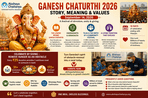
If you've walked through Mumbai during Ganeshotsav, you already know: the festival's most electric moments don't happen in individual homes — they happen in pandals. Elaborately decorated, lit through the night, drawing crowds from across the city and beyond, public Ganpati pandals are where Ganesh Chaturthi's community spirit is most visible and most alive. With the festival running September 14 to 25, 2026, this guide looks at how pandal culture began, what makes a great one, and a way to extend that community spirit even further this year.
How Public Ganpati Pandals Began (Lokmanya Tilak's Vision)
Public pandals aren't an ancient tradition — they're a little over 130 years old, and their origin is deeply tied to India's independence movement. Before 1893, Ganesh Chaturthi was primarily a private, home-based festival. That year, Bal Gangadhar Tilak — the freedom fighter later honoured with the title "Lokmanya," meaning "revered by the people" — transformed it into a public celebration, encouraging communities to install shared Ganpati idols in accessible, communal spaces.
Tilak's reasoning was sharp: under British colonial rule, political gatherings were tightly restricted, but religious assembly was much harder to suppress. By channelling community organisation through a public religious festival, Tilak created space for people to gather, share ideas, and build collective identity — laying groundwork that would go on to fuel the independence movement itself. The pandal, in this sense, was never just a decorated tent housing an idol. It was, from its very inception, a deliberate act of community-building, designed to bring people together across the social and caste divides that colonial society reinforced everywhere else.
More than a century later, that founding purpose is still visible in how pandals function today — as genuine community hubs, not just religious display spaces.
What Makes a Great Pandal Celebration
Ask ten people what makes a pandal memorable, and you'll get answers ranging from the scale of the idol to the quality of the decoration to the cultural programmes hosted alongside the puja. But beneath the visible spectacle, the pandals that leave the deepest impression tend to share a few common threads:
- Genuine community involvement, not just a small organising committee — pandals where neighbours, local businesses, and residents all contribute in some way tend to carry an energy that purely commercial or top-down productions don't.
- Cultural and social programming alongside the religious observance — many well-known pandals host blood donation camps, health check-up drives, and cultural performances throughout the ten days, extending the festival's reach well beyond puja alone.
- Thoughtful, sustainable decoration — an increasing number of pandals are moving toward eco-friendly materials and clay idols, reducing the environmental footprint of the celebration without diminishing its scale or beauty.
- Accessibility — the best-loved community pandals are genuinely open to everyone in the neighbourhood, regardless of background, echoing the very reason Tilak started the tradition in the first place.
If you're organising a pandal yourself this year, these are worth keeping in mind — not as a checklist, but as a reminder of what has made this tradition endure for well over a century.
Pandals as Community Anchors Beyond the Festival Itself
It's worth noting that some of Mumbai's most respected pandal committees don't limit their community involvement to the ten days of Ganeshotsav alone. Several well-established mandals run or support community initiatives throughout the year — educational scholarships, health camps, disaster relief efforts — treating the pandal not just as a festival structure, but as an ongoing community institution that happens to have its most visible moment each September.
This year-round orientation is worth considering if you're part of a committee thinking about your pandal's role beyond the immediate celebration. A pandal that mobilises its community once a year for decoration and celebration has real value; a pandal that uses that same mobilised community energy to support an ongoing cause — even something as simple as a shared annual donation drive — extends Tilak's original vision even further than the festival itself was ever designed to reach alone.
Community Prasad: An Old Tradition Worth Reviving
One thread that runs through pandal culture, historically and today, is the practice of prasad and community meal distribution. Many of Mumbai's larger, more established pandals have long traditions of feeding visitors — offering modak, sweets, or full meals to anyone who comes to seek Ganpati's blessing, regardless of whether they contributed financially to the pandal itself.
This tradition sits at the intersection of devotion and generosity that has always defined Ganesh Chaturthi at its best. A pandal isn't just a place to view a beautifully decorated idol — historically, and in the spirit Tilak originally intended, it's a space where the community looks after itself, where no one who walks in hungry is expected to walk out that way.
For smaller pandals — a housing society, a local residents' association, a neighbourhood committee — that same tradition of community feeding is entirely achievable, even at modest scale, and it's one of the most direct ways to embody the festival's original communal purpose.
What Visiting Pandals Teaches About Generosity
There's something worth noticing in the simple act of visiting several pandals over the course of Ganeshotsav, something many people do without quite naming it: the experience of being welcomed, offered prasad, and included in a celebration by people who have no particular obligation to you beyond shared devotion and shared neighbourhood. It's a small, repeated lesson in generosity extended without transaction — you don't pay for prasad, you're not required to have contributed to receive it, and the pandal committee's welcome doesn't depend on who you are or where you're from.
That model of open, unconditional generosity is worth carrying forward beyond the pandal itself. It's the same principle, scaled differently, behind organised charitable giving: meals offered not because the recipient has earned them in some transactional sense, but because feeding someone who needs it is simply the right thing to do, echoing exactly what a good pandal already practises every day of the festival.
Sponsor Prasad for the Community Around Your Pandal
If you're part of a pandal committee, a housing society organising a shared celebration, or simply someone who wants their Ganesh Chaturthi giving to reach beyond their own home, there's a direct way to extend this year's celebration into a genuine act of community care.
Akshaya Chaitanya's Ganesh Chaturthi donation programme lets you sponsor meals in Ganpati's name — meals that reach patients across 31+ government hospitals and children across 172+ municipal schools in Mumbai, prepared fresh daily at our FSSAI-certified kitchen. Whether your contribution comes from an individual household or is pooled together by your pandal committee as a shared community gesture (echoing exactly the collective spirit Tilak built this festival on), every ₹25 funds one complete meal, with an 80G tax exemption receipt for your records.
If your pandal or society is looking to organise a larger, ongoing giving initiative beyond the festival period, Akshaya Chaitanya's broader food donation programme and our full range of donation causes offer ways to build that community spirit of feeding others into a regular practice, not just a once-a-year gesture.
Sponsor community prasad this Ganesh Chaturthi →
Frequently Asked Questions
Why did public Ganpati pandals become so widespread in Maharashtra?
Bal Gangadhar Tilak popularised public Ganpati celebrations in 1893 as a way to build community organisation and unity during India's independence movement, transforming a private home festival into the large public tradition seen today.
Do pandals traditionally distribute food to visitors?
Yes — many established pandals have long histories of offering prasad or full meals to visitors, regardless of whether they contributed to the pandal, reflecting the festival's community-first origins.
Can a small housing society pandal also give back to the community?
Absolutely — community giving isn't limited to large public pandals. Even a small residents' committee can pool contributions to sponsor meals or support a cause, extending the same spirit at whatever scale is achievable.
How can our pandal committee donate together?
Akshaya Chaitanya's Ganesh Chaturthi donation page accepts contributions from individuals and groups alike — a pandal committee or housing society can pool funds and donate as a collective gesture in Ganpati's name.
This Ganesh Chaturthi, extend your pandal's community spirit further — sponsor a meal for someone beyond your own celebration.
Frequently Asked Questions
Take Action
Be the reason someone
eats tonight.
Join 12,000+ donors funding hot, freshly cooked meals across India. 100% transparent. Tax-exempt under 80G.
What our customers say


630+ reviews
as on 02/09/2026

Manogya Gondela
a month ago
I had the opportunity to donate and serve food at one of the hospitals that Akshaya Chaitanya serves. It was a wonderful experience and truly inspiring to be part of such a meaningful initiative. The food quality was excellent and well prepared. 10/10 experience ♥️

Abhijit Goldar
a month ago
Really grateful to have found them. They helped arrange a food donation event on very short notice. Everything was well coordinated, professionally managed, and photos were shared promptly after the event. Great work!

Avani Patel
4 months ago
It is wonderful to have an NGO like this for people who cannot always volunteer physically. The donation process is simple and convenient, and I appreciate receiving updates and photos showing the impact of every contribution.

namrata avaghade
5 months ago
It has been an amazing experience with Akshaya Chaitanya. The volunteers are very helpful, and the guidance from the team made everything easy and inspiring. Proud to be associated with an organization that serves with heart and purpose.

riddhi sonkar
6 months ago
I have been volunteering at this food donation camp for patients’ relatives and I am truly proud of the work we do. The meals are fresh, hygiene is maintained, and distribution is well organized. A wonderful initiative supporting families during difficult times.

Kishor Waghmare
a year ago
My family joined a food donation drive at Chhatrapati Shivaji Maharaj Hospital, Kalwa. It was a wonderful experience. The volunteers were supportive, the arrangements were excellent, and serving those in need brought joy to all of us. I encourage everyone to support this noble cause.
✅ FCRA Registered · 80G Tax Exempt · FSSAI Certified